January 2021: Sophie Pfeiffer, Her Daughter, Explains
About 10 years ago at the urging of the family Mummy wrote down, in longhand on one of her many yellow legal pads, her recollections of her round the world trip following college graduation. Given that she took the time to do so, I felt that it should be transcribed for preservation (and deciphering her strange handwriting is not an easy task). I’m sure that there were innumerable additional adventures which she has not detailed here, but it conveys a sense of what a remarkable trip during a remarkable time it was. The asterisks indicate words that were impossible to figure out.
[Sophie's editorial comments are in square brackets. Links and images added by Jeremy Butler, May 2, 2026.]
Sophia’s Account of her Post-College Graduation Journey
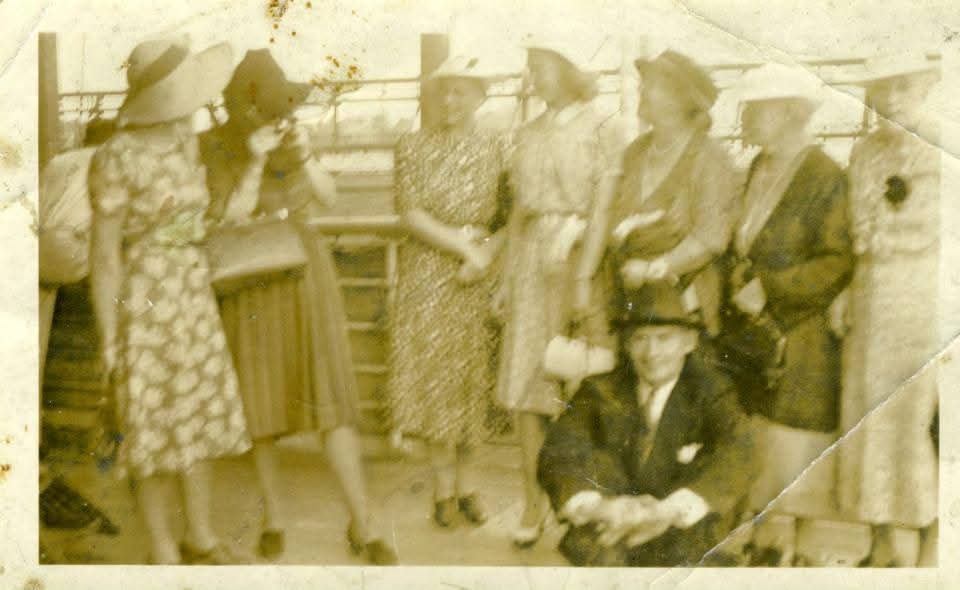
In June of 1939 I graduated from Vassar College and set out from Westport, Conn on what proved to be, but was not intended to be, a trip around the world. [The Wellses had a summer home in Westport.] I was 20 years old. (I felt incredibly grown up however, my favorite professor, William Smith, told mother at graduation that I was a nice girl but rather like a soft boiled egg: firm on the outside but runny in the middle. She was right). I had a travel grant from an anonymous benefactor at Princeton arranged by the son of one of Pop’s [F.C. Wells, Jr., Sophia's father] Princeton classmates, the source of which I never identified.
I sailed on the New Amsterdam [SS Nieuw Amsterdam], the fourth Holland America ship that I had crossed the ocean on.
[Sophia had done some type of study abroad program in Geneva the previous year. A side cultural note was that she reported going to a concert of Edith Piaf.]
Plymouth Harbor, England where we landed, was festooned with barrage balloons, looking like pudgy blimps, being flown to somehow advertise a new car being delivered to a dealership but their more secret purpose was to deflect the anticipated German bombs.
Train to London through all the backyards of Southern England was as unedifying as the approach to Washington or New York or any other large city. The capital however was a revelation. All my favorite storybooks came to life from the Busbys at Buckingham Palace to the chimes of Big Ben and the Tower of London Bridge. No time for much sightseeing as I had a boat to catch at Tilbury, England to go to Sweden where I was to meet my classmates Ruthie Adams and Lou Boynton who were joining me for the year. Our original plan was that Lou’s mother, Mrs B, was going to take an apartment in Paris which we would use as a base, but due to war breaking out Mrs B never came to Paris. In Stockholm Ruthie had booked us a room at the Grand Hotel (which was grand but not nearly as expensive as the name implies). In a 15th Century church in the Old City I first heard "Messiah" and was amazed that the entire audience stood up before the piece was over. Very rude it seemed.
Shortly thereafter we met up with three young Princeton architects who had been in Pop's office (Jack ***, Kidder Smith, and Thadeous Cr***). They were on their way to Finland where they had letters of introduction to visit some of [Finnish architect] Alvar Aalto’s works (private house and the ****). By *** of persistent badgering I persuaded the boys to let Ruthie and me join them for part of their trip. We took a boat to *** and hitchhiked the rest of the way to Aalto’s Gullichsen’s house where we were to meet our unwilling companions. After a brief survey course in Finnish Architecture 101 we took the boat back to Stockholm. En route word came that Germany had invaded Poland [September 17, 1939]. World War II had begun.
Ruthie and some of the other passengers became hysterical. Most seemed stunned, everyone on alert for the sound of German planes. As soon as we could we cabled our families to ask what we should do. Ruthie’s mother replied “come home at once.” My parents, in line with mother’s theory that successful child raising was based on “benign neglect,” cabled back “Use your own judgement. Do what you think best.” So I stayed.
For the first months of the war nothing much happened. After Ruthie left I moved to *** Pension to save money. This was the period known as Sitzkrieg with the allies sitting on one side of the Maginot Line, the Germans on the other side. Neither side seemingly wanting to make the first move. That changed rapidly with brutal bombing of London and the devastation of the French countryside, but for the moment it was still possible to move around Europe—with proper visas. I tried various schemes (including going to Spain to join the American Field Service to help with the end of the Civil War) but finally realized that the only sensible thing was to head East away from the war zone.
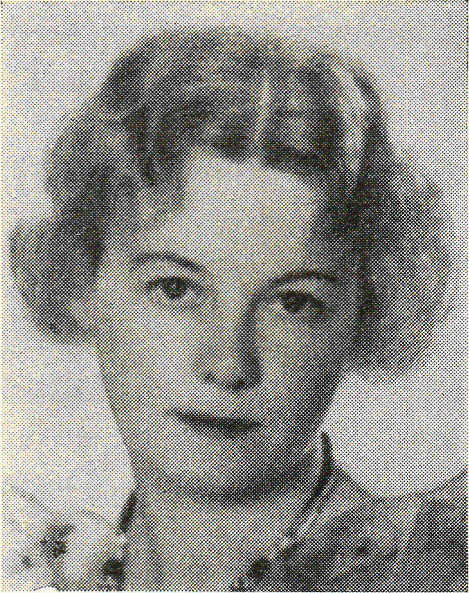
This entailed several weeks and then months of making the rounds of all the consulates trying to get the visas that would allow me to move on. Afraid of running out of money I tried to get a job but learned that it was impossible without work documents which the xenophobic Swedes never granted to foreigners. I finally found a non paying position as an au pair with the self described poet laureate of Sweden. Ingeborg Björklund lived in a little village outside Stockholm with her 2 sons. In addition to my two young charges my only other duty seemed to be to empty the poet’s chamber pot on the roses growing beneath her window. I lived in the attic next to the hired man, whose snores could be heard through the wall. I ate well, learned the proper etiquette for toasting with Schnapps (very complicated), enjoyed the old growth forest, and made periodic trips to all the embassies on my days off, having to avoid the US Consulate because they were trying to send all US citizens home.
In addition to saving money one additional bonus of my lengthy unplanned stay in Sweden was the Christmas I spent with the Ehrenburg family. *** had worked for cousin Polly Dodge as a social secretary and I had been given a letter of introduction to her family.
On Christmas Eve I was introduced to the Swedish custom of decorating the tree with strings of little paper Swedish flags and had my first taste of Glogg (mulled red wine spices, raisins and almonds). Next day we drove in a horse drawn sleigh to a small stone 12th century church, lighted by candles, in the countryside for a service before a huge Christmas dinner. Unforgettable.
Next day ferry to W*** and train to Berlin. The train was full of tired, young German soldiers on leave from the Western Front. I sat near an English speaking Danish boy with whom by common consent I spoke very little. Although Denmark was neutral (until it was invaded) and we were not yet in the war, it seemed inadvisable to emphasize our nationalities.
In Berlin I was met by a German journalist friend and by my first experience of a completely blacked out city. Hans had thoughtfully managed to get an extra ration ticket for me so that I could eat in the day and half that I was in Germany. He took me to a once fancy restaurant where we exchanged our ration stamps for very meager portions of mediocre food. Next day I went to the Haus der Deutschen Kunst (*** Nazi style paintings, all the good stuff locked away), then down in a coal mine, and a trip on a submarine (both simulated though the U-Boat and the trappings of the mine were real).
At the tram station I said goodbye to Hans whose farewell consisted of a hasty marriage proposal. This had nothing to do with my charms and everything to do with a US visa. Regretfully I declined and thanked him for his kindness to me.
[It is not clear why Sophia has omitted the experience of seeing Hitler speak while at a Nazi rally in Berlin, she has clearly described this to me, stating that it was “bone chilling.”]
Over the Alps to Italy, from winter to spring. After lightless days in Sweden (sunset at 2 PM) I could understand what the Swedes meant when they referred to “the *** nostalgia for the South.” I detrained in Verona trying to remember “two Gentlemen from ….” [The Two Gentlemen of Verona is a Shakespeare comedy] and looking fruitlessly for something reminiscent of Romeo and Juliet. On to Rome for Easter Sunday at St Peter’s. A frail looking Pope was carried in his papal chair on the shoulders of Swiss guardsmen in their yellow and blue medieval uniforms. A papal blessing in the square before St Peter’s, a magnificent dinner at Alfredo’s, and strenuous effort to discourage the persistent young man who then followed me down to Naples where a boat was waiting to take me to Greece.
[Sophia has also omitted her trip to Pompeii. She has described the older couple that took her under their wings so that she could tour the site with them and was given the opportunity to view the risque pictures which at that time were hidden behind curtains and would not have been shown to a young woman traveling alone.]
A short stay in Athens and then to Delphi where I stayed in the hotel that mother and the Pratts had visited in their elegant Rolls Royce, *** escorted, 1923 grand tour. I rode a donkey to the monastery at Hosias Loukas and explored the town on foot. I should like to have consulted the oracle but couldn’t find where she held court [Pythia was known as the Oracle of Delphi]. I was fascinated by the Bronze Ch*** in the museum [possibly the Charioteer of Delphi, a bronze sculpture], by the hippodrome where the races were conducted and by the operation of the village olive press. I made drawings of the press which were lost by a publisher to whom in a burst of maternal pride Mother had sent a batch of my letters.
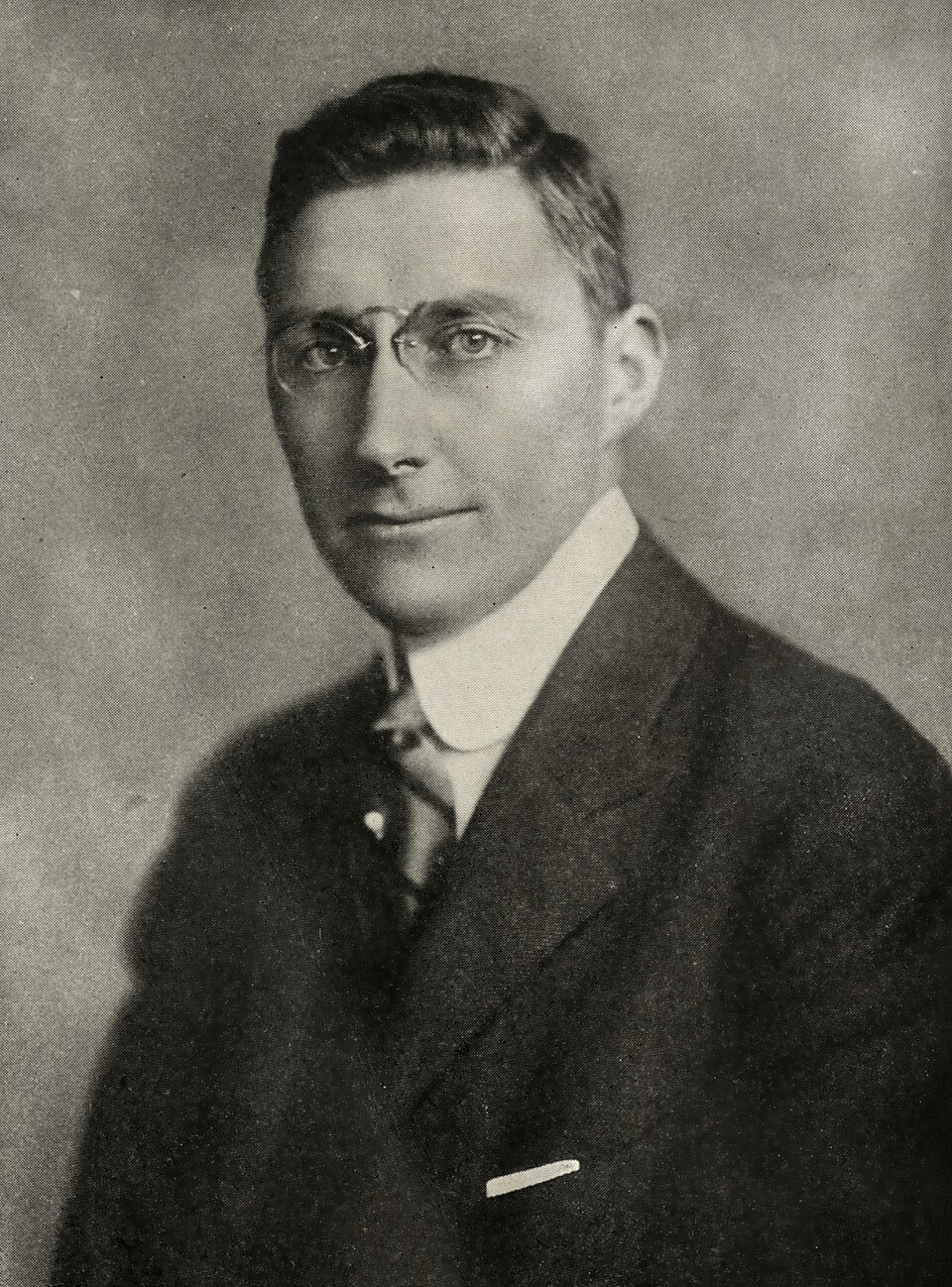
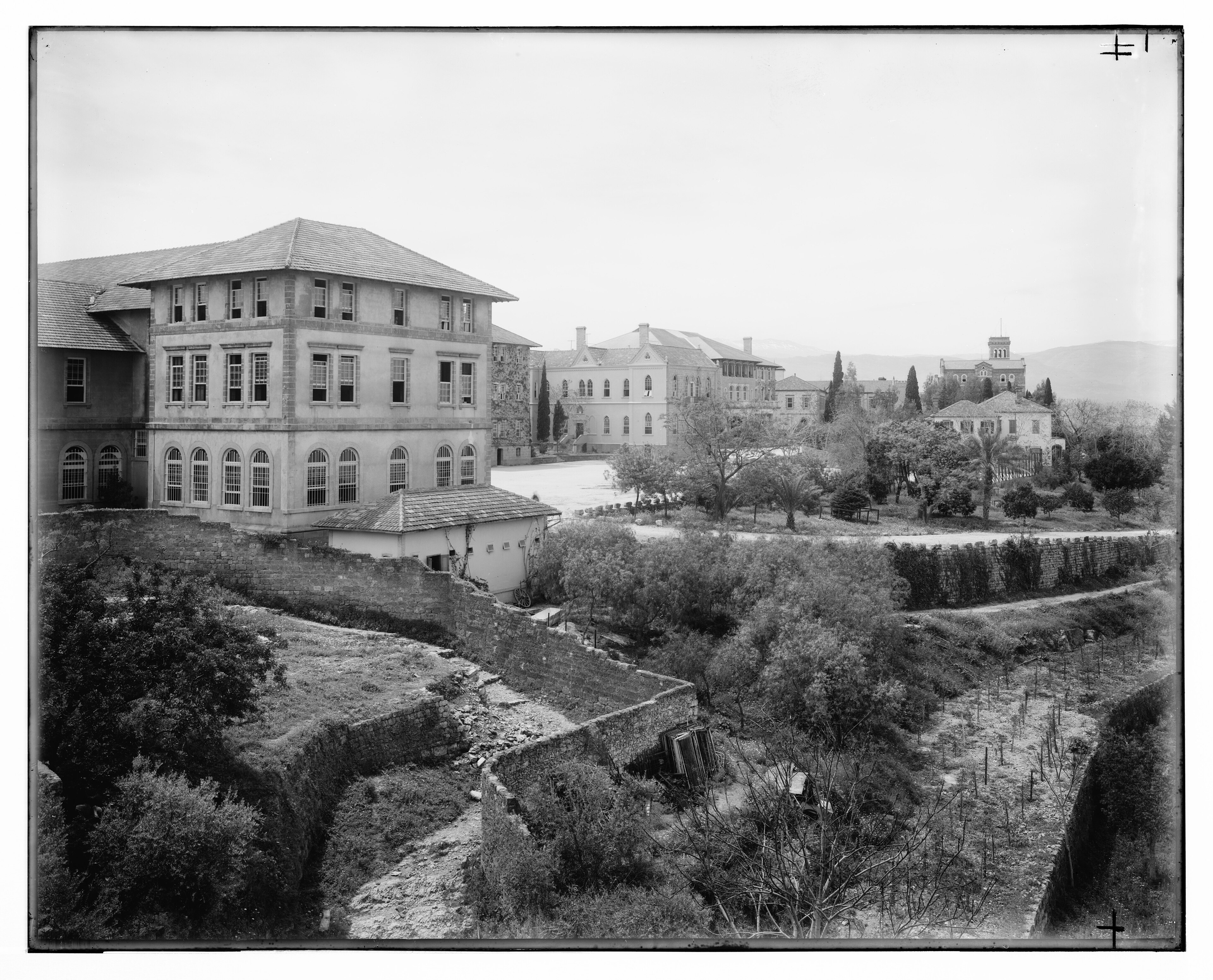
After Greece another boat, on which I was classified as an “artiste” because I was unknowingly following the route used by all the young European women being shipped to Beirut as prostitutes. In Beirut I was met by cousin Bayard Dodge, who must have been horrified when I emerged from the lower depths of a grimy little boat in the company of the other “artistes.” [Bayard Dodge was Sophia's 3rd cousin once removed; in other words, the third cousin of her mother.] However, he gallantly saw me through customs and took me to the campus of Syrian Protestant College [now the American University of Beirut (AUB); since 1923, Dodge was the president of AUB. More information is on his Wikipedia page.] where I was to stay with the Leavitts, mother’s beloved college roommate Aunt Meg [Margaret, née Bliss] and her husband Uncle Leslie, the head of the boy’s school [International College, associated with AUB; see this history of IC for more on the Leavitts.].
The Leavitt’s house was just off Rue Bliss, not far from the house which had been transformed into a bakery, where Father was born [F. C. Wells, Jr., while his parents—F.C. and Clara—were trying to set up a medical clinic at AUB; an article in the Princeton Alumni Weekly, 26 Apr 1940, says "the natal building is now used to manufacture liquid air."]. I had a room on the ground floor with a separate entrance, looking into a garden with palm trees that never stopped looking exotic to me.
On my first morning Uncle Leslie took me for an orientation tour of the campus. In front of *** House a young man appeared who he introduced as Tim Pfeiffer. As soon as I heard the name I said “President of the Civic League and the King in ‘Why the Chimes Rang.’ “ He had been 2 years ahead of me at Horace Mann [school] and because he was a “big man on campus” in the 6th grade I remembered him very well, including hearing his voice break as he presided over a meeting. I, a lowly 4th grader, had made no impression at all. We later found that because we had all the same teachers (including Miss Kirchway who also taught mother) it gave us a common frame of reference that was always mystifying (annoying??) to others.
When Tim stepped out to be introduced to the new girl he said to Dick Crosby (who told me much later) “she wants me, they all want me.” In this case it turned out to be true.
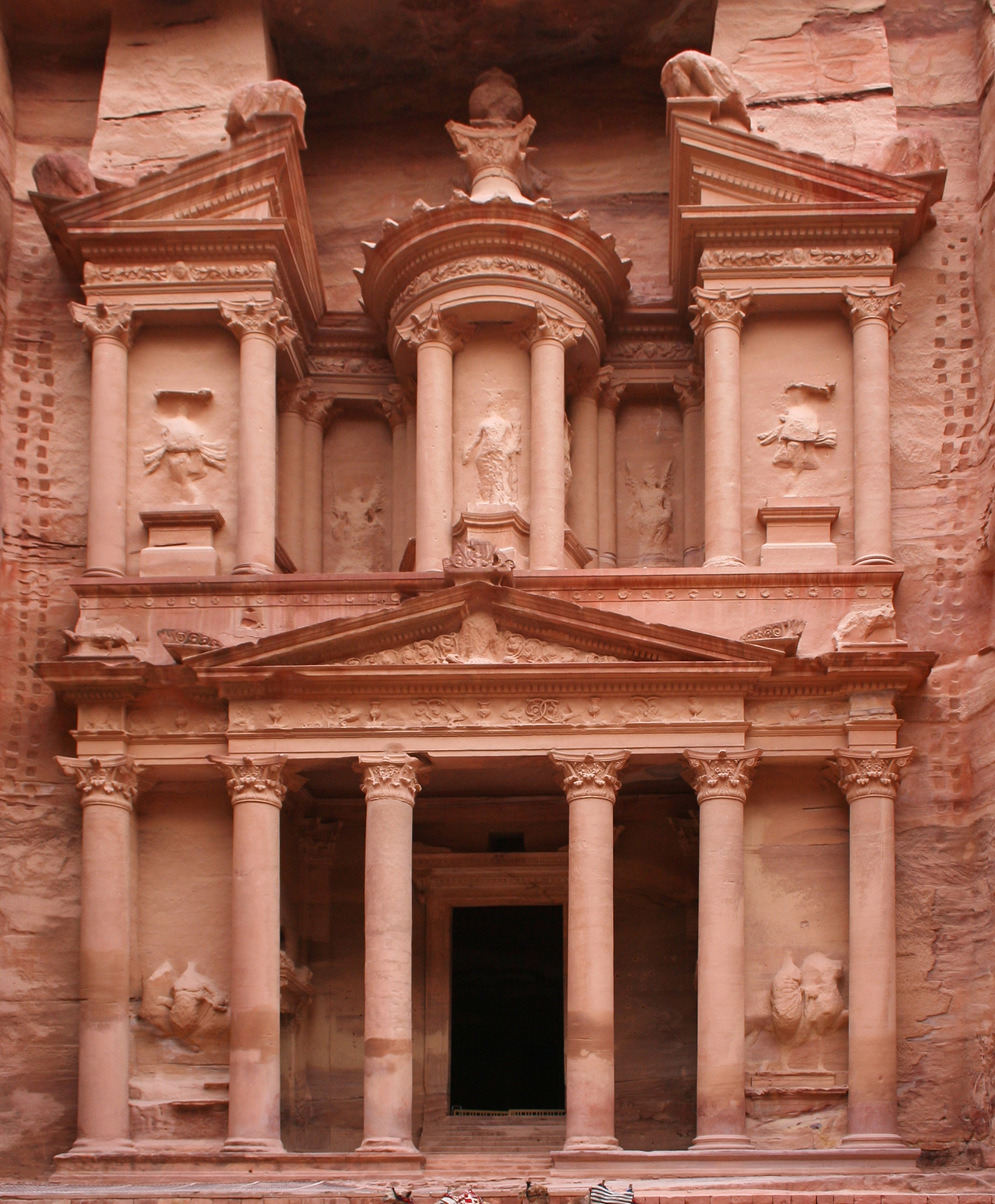
My “brief stay” in Beirut stretched on and on. At one point I went on a trip to Petra, “rose red city of rocks half as old as time” in what was then Transjordan [now simply Jordan]. I was with TAP [Timothy Adams Pfeiffer, son of Timothy Newell Pfeiffer and father of Timothy Franklin Pfeiffer] and Curt and Mary Strong who became our lifelong friends. On the way to Petra we spent the night with some Presbyterian missionaries who took us to an early Christian underground city. The approach was on hands and knees, then stomachs, through a long slanting passage into a hidden room. Very scary but sufficient presumably to keep the Christians safe from the ***.
Petra is a Nabatean city with elaborate temples and a treasury building [Al-Khazneh] all carved from solid rock in varying shades of red and pink (which I inelegantly thought looked rather like a butcher shop). It was approached on foot or by horseback through a long, very narrow cleft in the rock (which 2 years later flooded, drowning several nuns trapped in the passage). We lived in a cave, guarded by an Arab with a rifle and a fierce expression. People in *** were always talking about their fear that “the tribes would rise” and this was thought to be a necessary precaution. Pretty silly really. We subsisted on hard boiled eggs and oranges. TAP and I went to Jerusalem and then he returned to Beirut with the others.
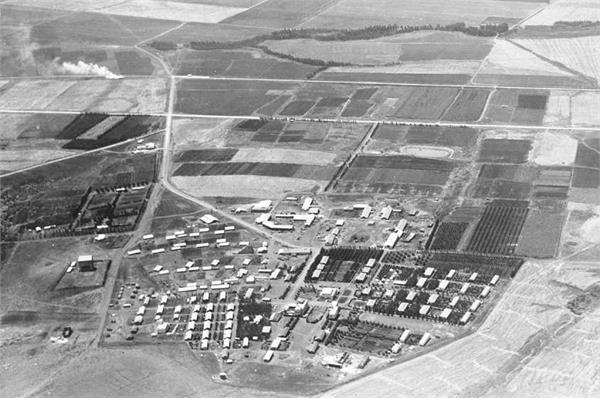
From Petra I went on to a Zionist Kibbutz called Ein Harod, a visit arranged by a friend of the Leavitts in Haifa. (This was a great concession as all the Americans in Beirut were strongly pro-Palestinian.) I knew very little about the political background, but was interested because I fancied myself as a Socialist and at that time the Kubbitzim were real examples of socialist organization (before they were taken over and became centers of political extremism). Ein Harod had a common room for meals and meetings, small individual rooms for families. Children were raised in a nursery and returned to parents at night; chores rotated, goods and services were shared. I was struck by the blond, vigorous young people who were in great contrast to the handful of older people who conformed in appearance to the stereotype of the people from the Shtetl and were highly religious. There was a separate Kosher table for them in the dining hall, the rest of the members being distinctly a-religious (but tolerant of the Orthodox in an amused sort of way). The only signs of the struggle with the Palestinians were round the clock armed guards and huge floodlights on all the buildings.
I was very kindly received by the Kibbutzniks who answered numerous questions and allowed me to tag along when they went to tend the grapefruit that they grew for export and their own use. I for many years kept up a correspondence with Sara ***, a girl about my age with whom I had become friends.
[Apparently Sophia returned to Beirut at this point although she does not make that clear.]
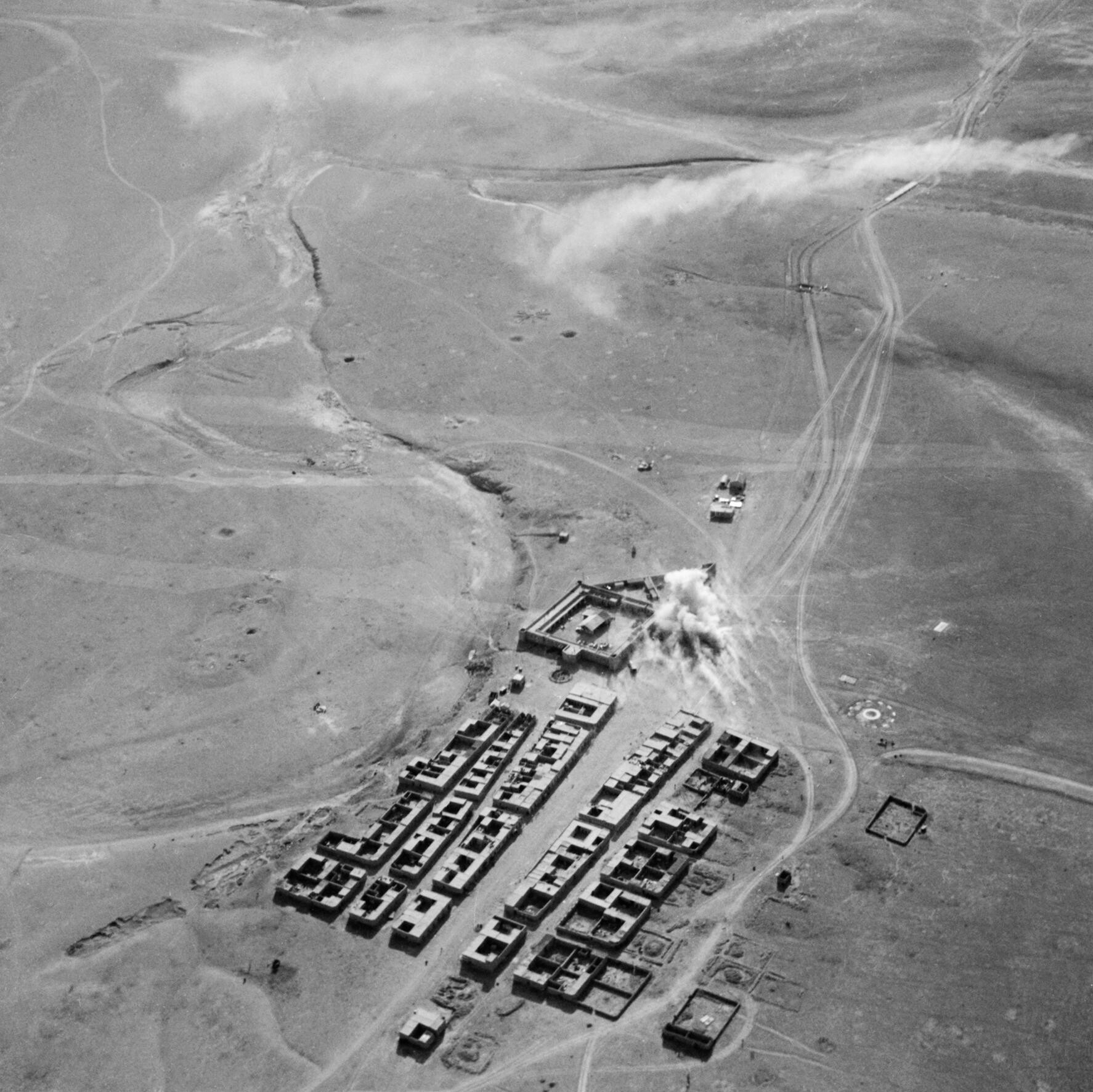
After a few more weeks in Beirut I managed to pry myself away from the charms of the city (and of TAP!) and set out again on my travels. (I have since wondered how and why the Leavitts were able to put up with me for so long and I have always been grateful that they did, but worried that I never thanked them adequately. This time I went by bus across the desert to Baghdad. The “desert” was hard packed gravel, not the Hollywood type sand dunes that the word desert connotes. Halfway across we stopped at Rutbah Wells, a military outpost where I was introduced to shandy gaff (½ beer, ½ lemonade), a real lifesaver in that climate.
[Note: In May 1941, soon after Sophia's visit, the British Royal Air Force bombed Rutbah Fort during the Anglo-Arab War. This aerial photograph shows the attack.]
My mental picture of Baghdad was composed of the “Arabian Nights” and the Thief of Baghdad, a Douglas Fairbanks movie that I sneaked in to watch at the [Union] Settlement. The reality was most like the fairy tales. Beautiful palaces, mosques, parks and public buildings on palm bordered avenues. While there I called on a former classmate from the international seminar I had attended in Geneva the year before. After tea at his apartment he tried to persuade me to take a bath in the elaborate bathroom off the living room. I took this as a signal to leave which I did in something of a hurry.
From Baghdad to Basra by train except that the Tigris and the Euphrates were flooding and had washed out part of the track. Everyone had to get off in the middle of the desert to wait for a bus to take us around the flood.
On towards Basra past Ur of the Chaldees—Abraham’s birthplace, a then unexcavated *** in the middle of nowhere. Basra was memorable merely for its ugliness and the sight of barefoot boys climbing 40 feet up a date palm to gather the fruit. Aboard the *** (British and Indian) boat I learned the origin of “posh:” port (side) out, starboard (side) home, depending on prevailing winds. A stop in Karachi (horrid city to which I vowed never to return- Ha!) and a visit to a crocodile shrine full of ugly sacred *** and on to Bombay.
In Bombay (now Mumbai) I stayed with acquaintances of the Leavitts. TAP had written to a classmate working for City Bank in Bombay named Gubby Magruder. Gubby lived with 3 other young men in a very fancy apartment in Malabar Hill. Like so many expats they lived in a style unimaginable to their peers at home, with bearers and drivers, clubs and parties, the heritage of the British Raj. Gubby lent me a Princeton beer jacket to go bunderboating in the harbor, took me to the Willingdon Club (which had a sign on the gate “no dogs or natives allowed”) to play tennis, took me sightseeing (including the requisite red light district where the women rattled their cages at me thinking I was a man in my beer jacket), and invited me to a dinner with his flatmates at their apartment. My waterloo. I have never seen such an array of silver at every place, arranged in some way unlike our “begin at the outside, work in.” I hadn’t a clue as to the proper implements for the first course (fish) but with everyone looking at me to begin I pitched in. Wrong knife and fork. Rescued for the next course by the ever attentive bearer. A highly embarrassing experience for the “sophisticated” Miss Wells.
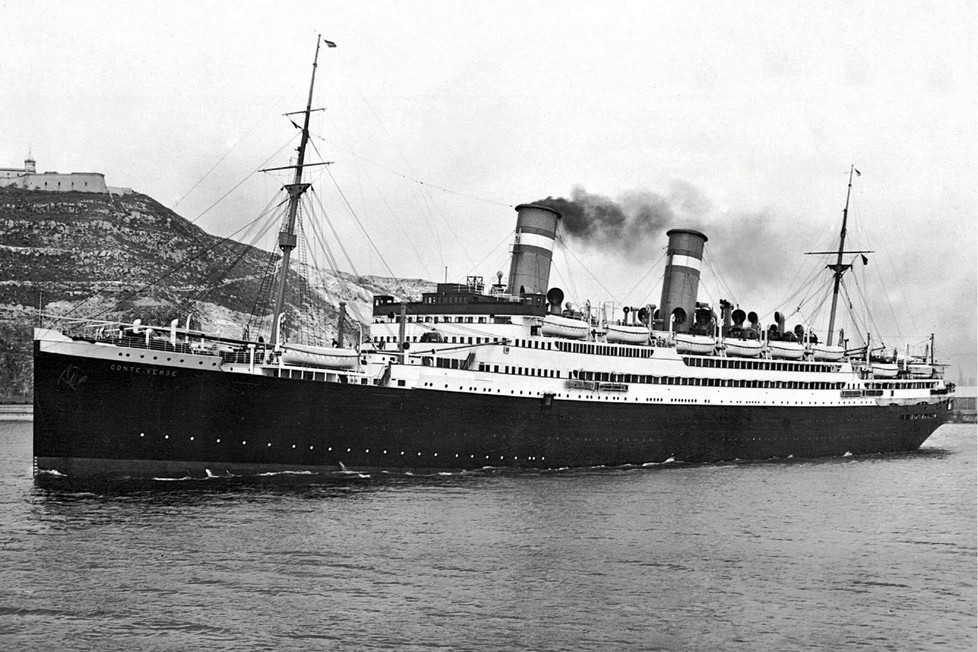
Another boat, this time a proper one, the SS Conte Verde, an Italian liner. In my usual fashion I had booked myself into 3rd class down in the bowels of the ship. This upset an American businessman who was also traveling to Shanghai. Some way (undoubtedly involving dollars) he had me transferred to a nice cabin on an upper deck. My benefactor was traveling with another man and a woman lawyer. All older and all exceedingly nice to me.
In the larger world things were not going well. Everyone expected that the Italians would soon jump in on the German side. As a result the Conte Verde was tracked [??] all the way around from Bombay to Singapore and *** [Manila?] (both of which we stopped at) by a British submarine ready to pounce when they declared war. We got to Shanghai one day ahead of the Italian declaration. [June 10, 1940]
When we got to Shanghai I was invited to share a room with the lawyer at the Cathay Hotel and was taken around by my original benefactor, first to a gambling casino and then to an opium den. The latter was depressing in the extreme. Dozens of ragged men lying on wooden shelves, obviously lost in their opium dreams. I was handed an opium pipe (like a small ***) and a pellet of opium to heat on a little burner. Fortunately I had enough sense to decline the offerings. Tennis in the French Concession with dozens of ball boys. [France gave up its concessions to China in 1943.]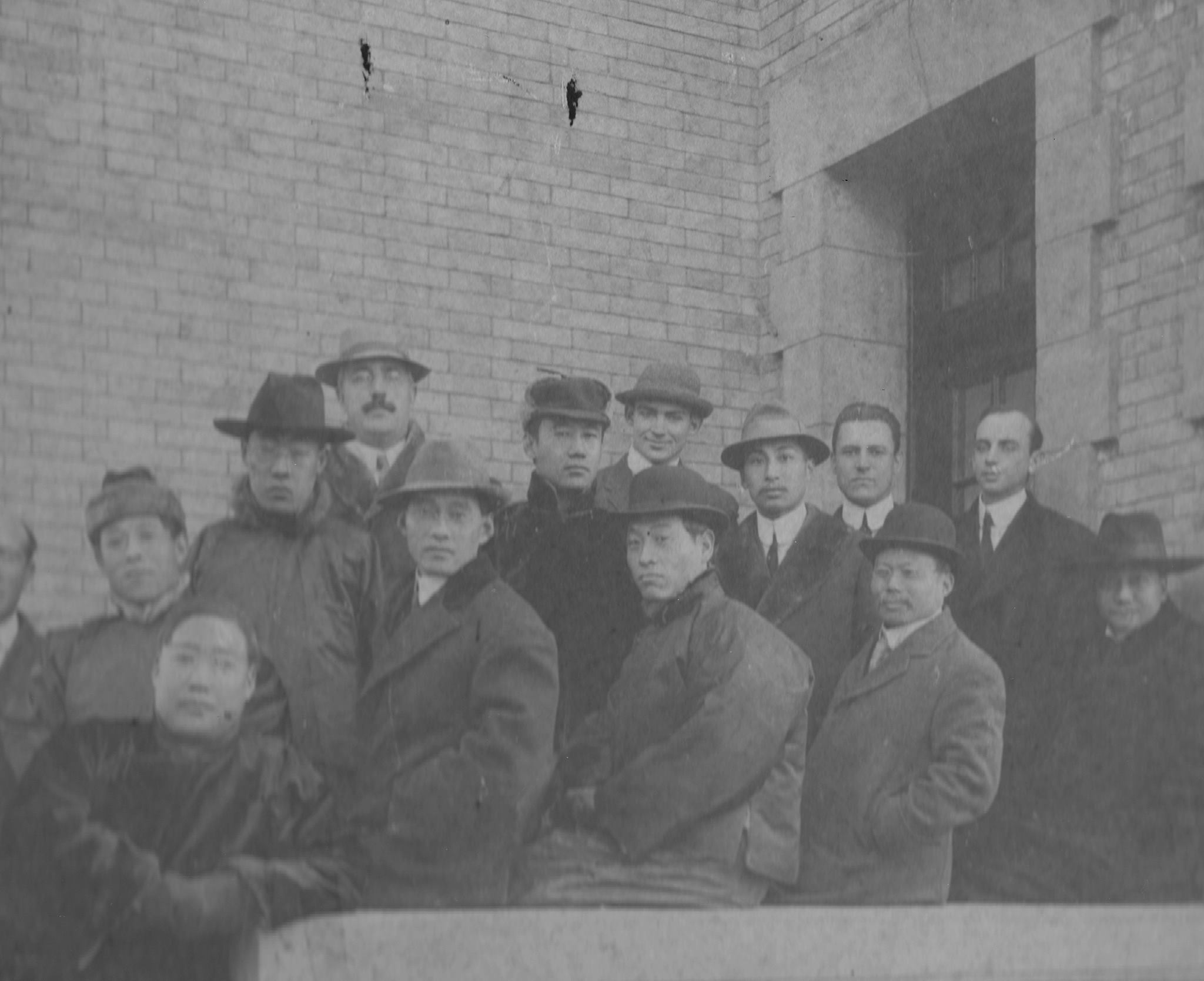
After Shanghai I wanted to go to Peking (Beijing) where Father had spent the years 1911-13 with Princeton in China [in the American Legation with the YMCA], having been brought up on tales of the overthrow of the Manchu Dynasty when he was there. North China was in the grip of the Japanese Army. Nanking had been sacked and brutally battered [during 1937-1938 up to 200,000 Chinese were raped and/or killed] and Peking was firmly in Japanese control. I was told that it would be impossible to go North without permission from the Japanese Army which was impossible for foreigners to get. Nonetheless I went over to the Japanese Headquarters and applied to the young lieutenant in charge for a laissez-passer. [a travel pass] I had in my passport a letter from President MacCracken of Vassar, stating that Miss Wells was a student in good standing at Vassar and adorned with an immense and very ornate gold seal (which was why I had it in my passport). When I handed over the passport to the lieutenant, I made sure that the letter fell out. “Oh, Vassar College” said he, “I once went to the boat races at Poughkeepsie and sat on some poison ivy. I have never forgotten… your pass will be at the hotel tonight.” It was.
_2015_December.jpg)
Next day I set off on the Blue Train to go North. First stop Nanking, still smoldering, where I spent the night. At the station we were greeted by soldiers wearing face masks and had to walk through a large puddle of disinfectant. (The Japanese for all their brutality to people they conquered were terrified of germs.) In Peking I was met by the Shoemakers (father and brother of Buzzy Shoemaker whom I had met in Shanghai and who had unbeknownst to me wired his father to look after me). Mr Shoemaker was an exporter of beautiful objects, whose house was like a museum, but considerably more comfortable. Younger brother Dan was detailed to take me around: Temple of Heaven, imperial palaces, and Forbidden City. In the latter we committed an act of vandalism that I have never regretted. Part of the Forbidden City was in disrepair—whether falling down or being renovated I couldn’t tell. From one dilapidated building was removed a diminutive ceramic horse and rider from one of the gutters. I carried it tenderly for the next several thousand miles and it is still one of my prized possessions.
After ten days with the Shoemakers I took a train through Manchuria and Korea to the ferry from Shimonoeski to Japan. Mukden was the next city after Karachi that I never wanted to see again. So far so good.
The train was full of Japanese soldiers. For the first and only time in the whole year I encountered rudeness bordering on belligerence. The soldiers unceremoniously ousted me from my seat on the crowded train and made me stand in the vestibule. There I was rescued by a train attendant who gave me his own little cubbyhole where I could at least sit down.
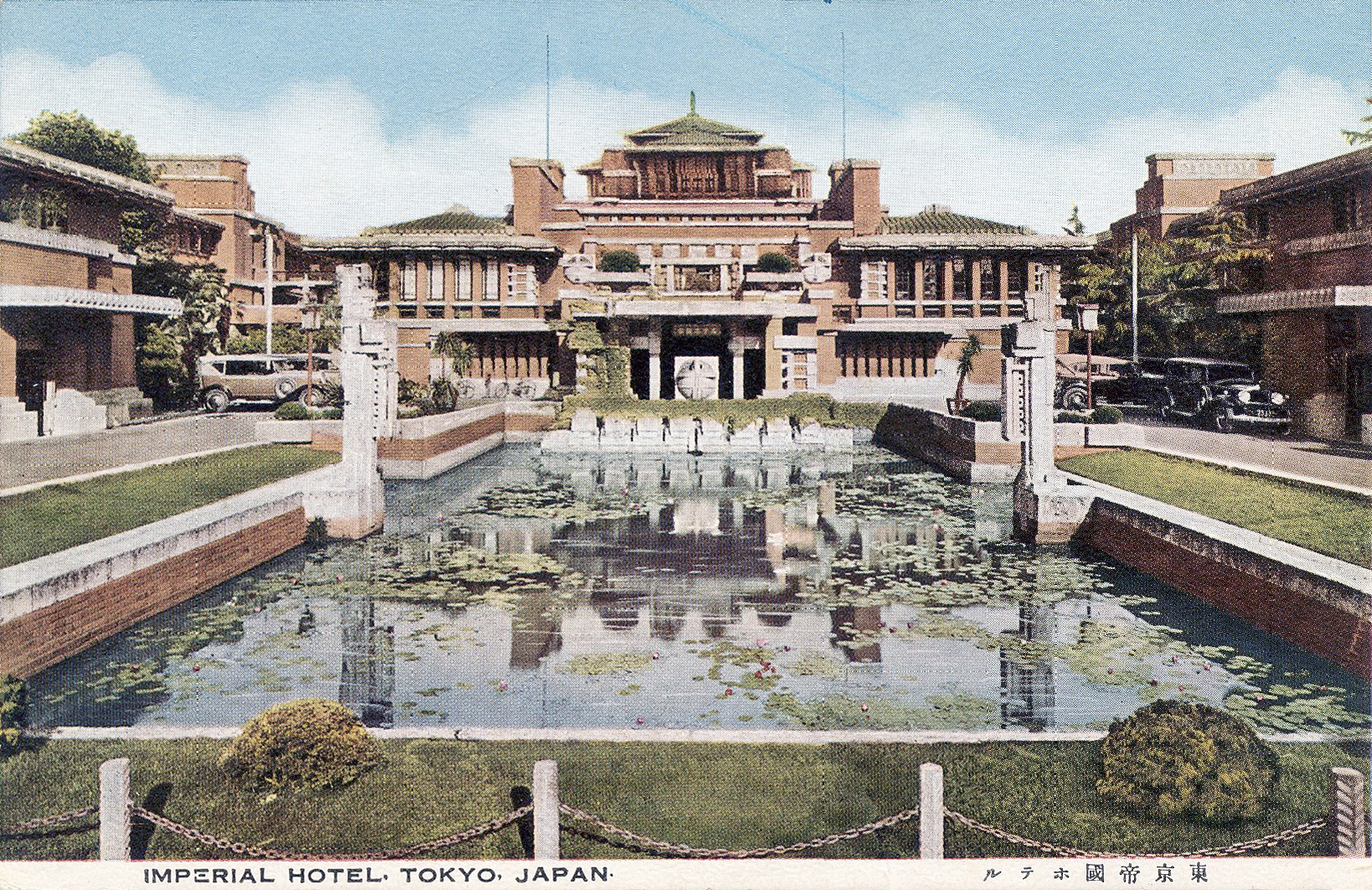
Arrived in Tokyo. I splurged on a room at the Imperial Hotel. Although designed by Frank Lloyd Wright, I thought it a rather miserable place, poorly designed and badly maintained. A trip to Kyoto, as lovely as Tokyo was not, introduced me to public coeducational bathing and the city’s famous temple with its enormous Buddha beside it. That night I persuaded a fisherman to take me Cormorant fishing….dugout canoe each with a Cormorant wearing a collar and leash. The birds were tossed overboard to catch fish. When they did they were hauled in by the leash and then the collar was squeezed upward until the fish pooped out. Every 4th or 5th fish the birds were allowed to eat.
Kyoto was lovely and peaceful, Tokyo was noisy and neon. An entire quarter was given over to pornographic shops—merchandise whose purpose I couldn’t even imagine and a catalog to take home in case you forgot anything. (I was later told by a more worldly wise friend that those catalogs were considered collectors items.) Very little else in Tokyo made much of an impression on me.
In Nagasaki I boarded the *** ***, heading West (East?) across the Pacific. Most of the trip was enlivened by a group of priests and nuns arguing over the proper day to celebrate mass...we crossed the International Date Line on a Sunday and thus had 2 Sundays back to back. Endless theological discussions.
Leaving the H*** M*** in Seattle I traveled East across the country in an ancient 7 passenger Buick which was carrying members of the American Ping Pong Team home from their successful tour of Japan. I was enormously grateful that they had let me hitch a ride with them. Thus accompanied I arrived in style at Westport, Conn, the point from which I had set out a year before.
A belated thank you to the many, many people who helped me.